A week-by-week post operation guide to a Knee Replacement Surgery
A week-by-week guide to swelling, mobility milestones, and when to push — straight from our surgical team.
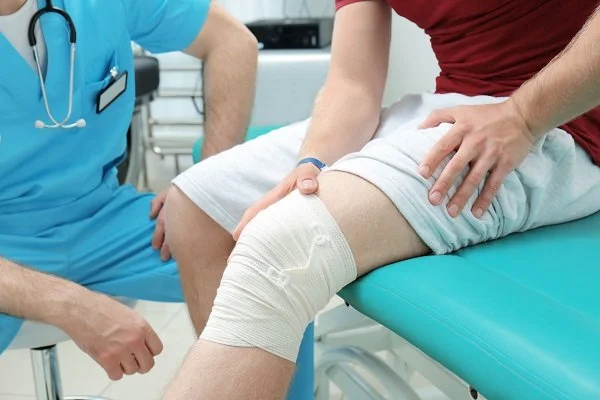
The first few days
Swelling, bruising, and soreness are completely normal right after a knee replacement. Your team will start you on a pain-management plan, and you’ll begin gentle movement and short walks — often the same day or the next — usually with a walker or crutches. Ice and elevation help control swelling, and you’ll get clear instructions for caring for your incision as part of your post-operative care.
Weeks 1–2
This stage is about protecting the incision and gradually regaining motion. You’ll have your first follow-up visit, and any sutures or staples are typically removed around this time. Physical therapy focuses on bending and straightening the knee and keeping swelling down.
- Keep up your prescribed exercises — consistency drives recovery
- Continue icing and elevating to manage swelling
- Follow your wound-care and follow-up instructions closely
Weeks 3–6
Most patients see steady gains now — more range of motion, more strength, and less reliance on a walker or cane. Many return to light daily activities, and your surgeon will let you know when it’s safe to drive again. Push within the limits your care team sets, but don’t rush past pain.
When to call us
Recovery isn’t perfectly linear, but some signs deserve a call right away:
- Fever, or increasing redness, warmth, or drainage at the incision
- Calf pain or swelling (which can signal a blood clot)
- Pain that suddenly worsens or isn’t controlled by your plan
Your timeline is personal. For more, see post-operative care, our knee replacement page, or why anterior hip patients walk sooner.
Recovering from knee replacement?
The Joint and Bone Institute of California is here to help at every stage. Call today or request an appointment.